Showing posts with label Christian Topics. Show all posts

Monday, March 21, 2016

Mary, Martha, and a Message for Moms


.

(Christ in the House of Martha and Mary, Diego Velázquez, 1618)

I'm driving home from work and call my wife to let her know.  As soon as she answers the phone I can hear it in her voice; she's completely stressed out.  She's trying not to talk to me about it because she doesn't want to have a heart that is grumbling or complaining, but I can tell.

I don't hear my son yelling or crying in the background or even trying to talk to her nonstop while she's on the phone.  I ask her how he was today and she tells me he was really good.  Okay, so she's not stressed over anything my son did.

The conversation continues for another few minutes as we talk about what we each did that day and what's for dinner.  Finally, unable to figure it out on my own, I just ask her, "Is there something stressing you, my dove?"  There's silence on the other end for a moment and then, "Well... it's the house."


Oh, this subject.  My beautiful wife is nearing the third trimester of pregnancy, has an almost 3 year old son who demands nonstop attention, talks to you about everything, and wants to run and explore (provided you're there running and exploring with him).  And as the old infomercial goes, "But wait, there's more!"  She's also in a lot of pain, my son was born asynclitic.  It's said to be the second hardest type of birth (the first being breach), and one of its unfortunate side effects, for my wife at least, is some lasting bone/muscle damage that's making her second pregnancy very difficult.  She's doing some physical therapy to help, but it can only do so much.

Needless to say, she's exhausted and can't walk for long.  I've been trying to take care of the things she can't keep up with, but I'm no mom.  I'm dad, which means housework gets done like a triage ward.  So clutter can stick around for a while, dishes sometimes pile up (especially when the dishwasher is clean and needs to be unloaded), but it's not like we're living in filth mind you.  I may be dad, but even I make sure the house is sanitary


Still, seeing the clutter stresses her, not because she's a perfectionist, but because she feels like it is a constant reminder that she's not doing her wifely duties.  I know she's being serious, but it always makes me laugh when she says that.  As if the Bible taught that a wife had to do all the laundry and all the dishes and the vacuuming.  It annoys her that I laugh, but you can blame my dad for it.  He drilled it into his sons' head that there were no gender specific chores.  If mom was doing dishes or sweeping or moping we'd better be in there helping her or doing homework.  Knowing how to do laundry was my brother's fault though; he knows what he did.

So I get home and I find a picked up house.  After we got off the phone my wife felt so guilty, despite me telling her not to worry about it, that she cleaned up the clutter.  Which was sweet and I tell her thanks, but she spent the rest of the night and much of the next day in pain.  The trade off isn't worth it.


In Luke 10:38-42 we're given a unique look into Christ's friendships outside His disciples.  He comes into the home of Martha and her sister Mary was there and Jesus sat down and began to teach.  Mary sat down and listened, but I love how the King James Version puts what Martha did, "Martha was cumbered about much serving."  Not just distracted, cumbered.  She's hindered, she's hampered, she's obstructed by the serving.

Martha wasn't just making sure people had a place to sit or getting dinner ready like a good hostess, she was being obstructed by overly focusing on the material concerns of how her home looked to her guests.  And what was Jesus' response when Martha finally got mad that her sister wasn't helping?  He rebuked Martha for letting the material keep her from enjoying the spiritual.

And this isn't just a thing for pregnant moms either.  Even before the pregnancy, my son consumed my wife's energy.  But here's the thing, hardly a day goes by that my wife doesn't send me a picture of my son's smiling face, or my son snuggled up to momma all worn out.  As Jesus put it, my wife "has chosen the good portion, which will not be taken away from her."

So don't get stressed out about a house that gets a little messy, don't be ashamed to invite friends over, and don't stop investing in the good portion.
Share/Bookmark

Tuesday, October 21, 2014

Gifts of the Spirit and Mark Driscoll

A week ago I had the opportunity to teach some high school boys about the Holy Spirit, who He is, His characteristics, His roles in salvation and the believers life, and briefly touched on the gifts He gives believers.  Unfortunately, since I only had thirty minutes with them, I wasn't able to spend any time at all on the gifts of the Holy Spirit, but it's a very important subject.

From the very foundation of the church people have wanted to use the Holy Spirit as if He were a source for mystical power.  In Acts 8, we see a believer, Simon the magician, actually trying to buy the Holy Spirit and we are told in the verses that follow that he tried to do so because we was jealous and bitter that the Apostles had been given a gift that he had not.

But what Simon and his spiritual descendants fail to grasp is that the gifts of the Holy spirit are not for your own personal edification.  We can see this just by looking at the "love chapter" in the Bible.  Seriously, turn to 1st Corinthians 13, and then flip forward or back one chapter from where you are and what do you see?  God, through the pen of Paul, talking about gifts of the Holy Spirit and how the Corinthians were abusing those gifts for their own personal glory.  1 Corinthians 13 is not a lovey dovey message, it is a strongly worded reprimand against the Christians in Corinth that were living in sin by their flagrant abuse of the Holy Spirit resulting in divisions in the church.

So next time you're sitting there thinking, "Hey, I wasn't paying attention, did I just _______?" and think the Holy Spirit enabled you to do something supernatural, here's a quick sanity check to help you figure it out:  Does it minister to the church?  If the answer was yes, then the answer is at least "maybe".  If the only person who benefits is yourself then the answer is no!  The things I hear people try to attribute as a work of the Holy Spirit are mind boggling and resemble the mystical spiritual ki/chi energy or magical potions found in eastern religions than it does anything in the Bible.

A good follow up question would be is it being used in a manner consistent with scriptures?  I'm willing to believe God might still allow someone to speak in tongues, but if they do not follow the command to have someone interpret that tongue as commanded 1 Corinthians 14:27-28 then why should I believe they are Christians?  After all, Christ Himself said in John 14:15, "If you love Me, you will keep My commandments." If someone is directly rejecting a commandment of Christ, how can we claim that they love Christ at all?

There is a reason all this has been weighing on my mind, beyond the fact that I just taught a lesson on it.  This past week Mark Driscoll chose to resign rather than endure church discipline.  In a process that was disturbingly similar to what happened at my own church a decade ago, he had the decks stacked in his favor to be acquitted, though not guilty of moral (read sexual) impropriety (as if that's the only sin worth holding a pastor accountable for), the Board of Elders asked him to submit to, what Driscoll's church called, a "spiritual care plan", and instead of enduring such discipline resigned (and then went to speak at a different venue).

We are told in 1 Corinthians 12:10 that the Holy Spirit has given some people the gift of discernment.  When people pop up and start saying, "hey we should really be paying attention to this guy because he's out of line" instead of telling them to sit down and shut up, or saying "well you don't have all the fact so there's no way to no for sure", we should pay attention and check what that guy is saying against the standard of scriptures.

This Driscoll fiasco should have been stopped 7 years ago when he preached a sermon on the Song of Solemn stating that God commanded wives to do specific sexual acts on their husbands regardless of their own comfort with it.  Disregarding the complete abuse of the passage to reach such a conclusion, forcing your wife into something she is not sexual comfortable with directly violates Ephesians 5:28 where husbands are told to love for cherish their wives above their own needs (i.e. as Christ loved the church).  It probably should have been stopped even sooner than that had only someone prevented a spiritually young in the faith Driscoll assuming an elder/pastoral role when he co-founded Mars Hill.

Rather than letting these things escalate until they're the stuff of national news bringing derision on the name of Christ we need to not suppress the gifts of the Holy Spirit, even the dealing with of sin privately within the church through proper discernment is a gift designed to bring unity and peace to a church.  Those who would block such work are hindering Christ and the church and are directly contributing to a process which eventually blows up and brings shame on us all.
Share/Bookmark

Monday, January 13, 2014

Making the Most of your Bible reading plan


Ah the start of a new year, even though polls show as much as 80% of those who profess to be Christians fail to read the Bible at all, for those of us who actually care to read the things that the God we claim to serve felt important enough to write down for our edification the start of a new year means the start of a new “Read-through-the-Bible-in-a-year” reading plan.  These plans are nice and they really help young in the faith believers get into the habit of reading the Bible, and they can help mature in the faith believers read passages that they might tend to miss as they choose a new book to read as the finish the last one.

The drawback is to read the Bible in a single year you have to read 3 ¼ chapters every day (or three chapters for 3 days, and four chapters on the fourth day).  That can end up being a huge amount to read every day (especially on the day you need to read Psalm 119!), this means the downside to such a reading plan is we fail to give the proper level attention to what we are reading. 

Let me encourage anyone participating in such a reading plan this year to go one-step further.  Pick a scriptural subject, any scriptural subject you are interested in at all, and write down everything the Bible has to say about that subject. After you have picked a subject, write down the inverse of that subject, or as close to the inverse as you can get.  So if you want to read everything the Bible says about God’s love, also write down everything the Bible says about His wrath.  If you want to write down everything about Salvation, also write down everything the Bible has to say about God’s condemnation.  At the end of the year, you will be a better-rounded Christian for having read both sides of the issue.

If you are not planning to read the Bible through in a year and it has been a while since the last time you read through the Bible in a year, it is not too late to get going this year!  There are plenty of online resources that will help you break down what passages to read on which day, and even apps you can download for your phone if you want that extra level of interaction.  

 Again, here are the steps I recommend doing:
  1. Pick a year long reading plan
  2. Pick a scriptural subject that really interests your or you would like to learn more about and write it down
  3. Now think hard and also write down the exact opposite (or as close to the exact opposite as you can think of) of the subject you picked
  4. As you read the Bible write down everything it has to say about those two subjects (I like to hand write this, but doing it in a computer program is fine, the important thing is to write it down).
  5. If you want to go above and beyond, at the beginning of the year, write down what you expect the Bible to say about the two subjects and then at the end of the year compare what you expected the Bible to say to what it actually said.

Share/Bookmark

Tuesday, November 19, 2013

A response to "Confronting the lie: God won’t give you more than you can handle"

I've recently seen a link going around Facebook entitled "Confronting the lie: God won’t give you more than you can handle" in which the author, whom I choose not to name, confronts the notion that God won't give someone more than they can handle.  He starts off well enough, but then he starts to talk about spiritual stuff.  He asks God 6 questions:

Why? Why not step in? Why not act? Why wouldn’t you make it right? Why couldn’t you part the clouds and provide a moment for us to catch our breath? Why everything at once? Why? - See more at: http://natepyle.com/confronting-the-lie-god-wont-give-you-more-than-you-can-handle/#sthash.ZvrnsSFi.cfpGWPvl.dpuf

Why?
Why not step in?
Why not act?
Why wouldn’t you make it right?
Why couldn’t you part the clouds and provide a moment for us to catch our breath?
Why everything at once?
Why?


And then he swears and uses anecdotal evidence to prove that God does give people more than they can handle.  Though in his defense, he does at the end use a scriptural reference.  The author claims that it takes "courage" to ask these "holy" and "sacred" questions.  It's a bit of stretch to call the questions holy and sacred and it's an equal stretch to say it take courage.  But they are important questions because they are questions that all believers must at one point ask on their journey to spiritual maturity. So if I may be so bold, let's just call these questions what they are a sign of:

Spiritual immaturity

If the author ever reads this article I mean no offense by the previous statement.  If there is anyone else reading this who feels insulted because I just implied asking these questions was something you did in your spiritual infancy, I hope you also continue reading because this is rather important.

We all start our journey as Christians here:

We all start off as infants in our Christianity as Paul writes in 1 Corinthians 3.  That's nothing to be offended at or bristle over or be ashamed of, nor is it something for spiritually mature individuals to ridicule you for.  It is, however, something to graciously accept and be aware of in all humility.  It's also important to remember that just because someone has been a Christian for a long time does not mean they are no longer spiritual infants. In 1st Corinthians 3:2 (emphasis added) Paul writes,

"I fed you with milk, not solid food, for you were not ready for it. And even now you are not yet ready,"

Paul is saying, "Hey, by now you've been Christians long enough such that we should be off the milk and at least up to cheerios!  Why am I still having to feed you milk?"  So simple longevity as a Christian does not make one Spiritually mature, and if you've been a Christian for a long time and have yet to graduate to deeper theological matters, then maybe it's time to change the way you do your Bible study or move to a church that does more than shallow teaching of the scriptures because Paul exhorts those who have been in Christ to transition to solid, spiritual food.

So why am I saying these questions are a sign of Spiritual immaturity on the author's part?  Well, two reasons. 

First, and of lesser importance, there's the swearing.


I know swearing a strangely trendy thing for "hip" "pastors" to do, but it is also a sure fire sign of spiritual immaturity.  Setting Romans 12:2 aside in which we are told "Do not be conformed to this world, but be transformed by the renewal of your mind" which I believe is too open ended to be used as proof against swearing.  We are told in James 3:9-12

"With [our tongues] we bless our Lord and Father, and with it we curse people who are made in the likeness of God. From the same mouth come blessing and cursing. My brothers, these things ought not to be so. Does a spring pour forth from the same opening both fresh and salt water? Can a fig tree, my brothers, bear olives, or a grapevine produce figs? Neither can a salt pond yield fresh water."

We, as Christians, have been called to tame our tongues and refrain from cursing (as well as coarse/vulgar talking in Ephesians 5:4 and the instruction to abstain from even the appearance of evil in 1 Thess. 5:22).  That the author, or any Christian for that matter, has yet to grasp this basic truth is a sign that they are still spiritual infants who have not yet begun to glean anything but very surface level applications when they read passages.  While it is not okay that they curse, they need to immediately repent and sin no more on that matter, it is okay that they are still young in Christ and growing in maturity.  It is my hope and prayer that he learns these things and grows in his spiritual walk.

(This has nothing to do with anything, but this is a fascinating article about how the brain handles swearing, basically it's not processed as language but as emotion, an interesting concept in conjunction with what God says about people ruled by their emotions)

**Important Disclaimer!  With what I am about to say, I am by no means trying to trivialize the very real trials the author had gone through!  Some people took pot shots at him in the comments section of his post stating that all the hardship he was facing were a result of sin in his life.  If God held us accountable for all our sins in such a manner we'd all be leprous corpses!  The belief that you are somehow holier than a sick person is a satanic, Pharisaical, blasphemous mindset.  We know it as such because of the interaction between Christ and His Disciples in John 9:1-3

"As He passed by, He saw a man blind from birth. And His disciples asked him, “Rabbi, who sinned, this man or his parents, that he was born blind?” Jesus answered, “It was not that this man sinned, or his parents, but that the works of God might be displayed in him."

Sickness is actually seldom portrayed in the Bible as a direct punishment from God and more often shown as the result as the tremendous weight of sin in the world (Romans 8:18 ff) or as an event to glorify God. So when I point out the implication of each of his questions, I'm not ridiculing or deeming him.  I'm pointing out the reality that these are questions we ask in our spiritual infancy and providing the answers that God has given us in the Bible.

**End of disclaimer**

The second reason these questions are a sign of spiritual infancy is because they are all focused on himself.

Think about what each question implies. 

Why? (are You (God) letting this happening to me)
Why not step in? (so this wouldn't happen to me)
Why not act? (So it will stop happening to me)
Why wouldn’t you make it right?
(Right as defined by *me*, not You, God)
Why couldn’t you part the clouds and provide a moment for us to catch our breath? (This one is already evidently focused on himself)
Why everything at once? (If You're going to do this why can't it be on *my* schedule instead of Yours, God?)
Why? (are You (God) letting this happening to me) (again)

What do all these questions have in common as their focus?


They all about me.  I am the focus of each of these questions.  In fact several of them are implicitly stating that we are more aware of our needs than God or that God is somehow absent or uncaring or unaware about what is happening in his life.  If God was just paying more attention then He wouldn't have allowed things to happen the way they are.

These were also all questions Job found himself asking when God stripped him of his wealth, his family, and his very health.  In the end after 37 grueling chapters of man based theology and his friends telling him it was all because of some secret sin of Job's, God Himself enters the scene and says one of my favorite things in the Bible

"'Now gird up your loins like a man,
And I will ask you, and you instruct Me!

'Where were you when I laid the foundation of the earth?
Tell Me, if you have understanding,
Who set its measurements? Since you know.'"

We know from the beginning of Job that the actual cause of all the calamity Job faced was so that the name of God would be glorified.  It is truly an amazing and powerful book when you realize that at the end of it Job never get's his questions answered.

Just like us Job was never told why God allowed his children to die and his finances to be destroyed and his health to vanish all in the span of a few minutes.  And as we grow in our spiritual maturity we come to understand that the things happen to us because God is Sovereign,  because God is Righteous, because God is the ultimate Authority, because It's all about God, not me.  Very rarely do we get to know the exact reason for hard times in our lives.  

Sadly, the author actually ends the article with the following paragraph. (Emphasis added)


Don’t hear me saying I am rejoicing because of the last couple of weeks.  I am not.  Not once have I danced around our house shouting, “Yeah suffering!”  Instead, in the midst of pain and hurt, I am actively expecting God to do something.  I don’t know what.  I don’t know when.  But I am expecting the God of resurrection to heal us.  I am expecting God to restore us.  I am expecting him to redeem this situation.  I am expecting him to do this and so I will be actively looking and waiting for him to do something. - See more at: http://natepyle.com/confronting-the-lie-god-wont-give-you-more-than-you-can-handle/#sthash.6rRmYkJS.dpuf
 Don’t hear me saying I am rejoicing because of the last couple of weeks.  I am not.  Not once have I danced around our house shouting, “Yeah suffering!”  Instead, in the midst of pain and hurt, I am actively expecting God to do something.  I don’t know what.  I don’t know when.  But I am expecting the God of resurrection to heal us.  I am expecting God to restore us.  I am expecting him to redeem this situation.  I am expecting him to do this and so I will be actively looking and waiting for him to do something.

This is heartbreaking because in his spiritual infancy he doesn't realize that God already is doing something! God is not blind or unaware of his distress.  Rather than his response of, "Not once have I danced around our house shouting, "Yeah Suffering!" James has a different perspective in Chapter 1 verse 2-3

"Count it all joy, my brothers, when you meet trials of various kinds, for you know that the testing of your faith produces steadfastness. And let steadfastness have its full effect, that you may be perfect and complete, lacking in nothing."

Or in other words, instead of ultimately blaming God for not stepping in on your schedule and doing things the way you think they should be done, you say

While no one expects us to be dancing with joy in the midst of adversity, we are to have an inner peace and joy, comfort if you will, in the knowledge that trials are given to us by God for our benefit.

And that's the thing.  The statement "God will not give you more than you can handle" is true, provided you understand it as a spiritually mature Christian.  God will give you so much that you will despair and be broken and be brought to lowest you've ever been, but you will be able to handle it because God is the one who has allowed it to happen and it has a purpose as described in 2 Corinthians 2:8-9 (Again, emphasis added)

For we do not want you to be unaware, brothers, of the affliction we experienced in Asia. For we were so utterly burdened beyond our strength that we despaired of life itself. Indeed, we felt that we had received the sentence of death. But that was to make us rely not on ourselves but on God who raises the dead.

The spiritually mature response to trials is to realize that God will never give me more than I can handle in Him.  Everything that He gives me is for my edification, when He takes me to the brink it is so that I will cease attempting to rely on myself in my spiritual immaturity, and instead rely wholly on Him as a mature Christian.
Why? Why not step in? Why not act? Why wouldn’t you make it right? Why couldn’t you part the clouds and provide a moment for us to catch our breath? Why everything at once? Why? - See more at: http://natepyle.com/confronting-the-lie-god-wont-give-you-more-than-you-can-handle/#sthash.ZvrnsSFi.cfpGWPvl.dpuf
Confronting the lie: God won’t give you more than you can handle - See more at: http://natepyle.com/confronting-the-lie-god-wont-give-you-more-than-you-can-handle/#sthash.ZvrnsSFi.cfpGWPvl.dpuf

Share/Bookmark

Monday, November 18, 2013

How Far is Too Far?

There's been a lot of talk as a result of Mark Driscoll crashing the strange fire conference and I'm not going to weigh in those matters at this late point in the game because they're not important to what I want to discuss.  What I do want to talk about is a common response I saw in the midst of these discussions.  A conversation would be going along about what various people thought about Driscoll's actions and the theological truths of Cessationism versus Continuationism and suddenly someone would chime in with:

"What does it matter?"

I was always taken aback by this response.  I know that they weren't trying to be flippant with God's word, and it came from people who I know to be solid mature Christians, but are legitimately asking the question as long as we have the fundamentals down isn't everything else of secondary importance?

So the question that springs to my mind in the midst of all this is at what point have we perverted so much of the rest of the Gospel that we are now teaching a gospel of our own making?  At what point do we, like this Justin Bieber fan

go too far? (yikes!)

The short answer is I don't have an answer.  I don't think it's possible for anyone but God to weigh the inner most workings of a man's heart and go "This one has truly trusted in Me alone".   That said, I think there are three points that are worth considering:

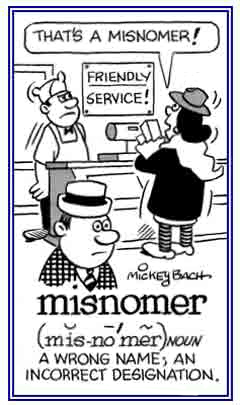
1) Secondary issues are a misnomer
2) We've been given instructions to test the validity of our own faith and the faith of others
3) It shouldn't be about how far we can get on secondary issues (see #1)

(Does this seem too long and you just want to skip to a short summary?  Skip to the tl;dr section, and read the rest when you have the time.

1: Secondary issues are a misnomer
2nd Timothy 3:16-17 states that

"All Scripture is breathed out by God and profitable for teaching, for reproof, for correction, and for training in righteousness, that the man of God may be complete, equipped for every good work."

We also know from Deuteronomy 4:23-25 that God jealously guards the sanctity of His divinity and Leviticus 20 verses 22,23 and 26 states

"You shall therefore keep all my statutes and all my rules and do them, that the land where I am bringing you to live may not vomit you out. And you shall not walk in the customs of the nation that I am driving out before you, for they did all these things, and therefore I detested them.
You shall be holy to me, for I the Lord am holy and have separated you from the peoples, that you should be mine."

This does not paint the picture of a God who doesn't care about "secondary issues" We have been called to live in perfect accordance with God's commandments.  We will fail, constantly and miserably fail, but we are called to strive for that perfection of holiness because everything in the scriptures are of primary importance.

Now yes, I understand that when people say "primary" what they mean is that which results in Salvation namely a proper faith in the Gospel that Christ died for our sins, was raised from the dead on the third day, and it is salvation through faith in His works alone that justifies us, that we're all one body of believers and it doesn't matter at the end of the day if you believe that the miraculous works of the Spirit have ended, or if they continue.  Which is a great segue to number 2!

2: We've been given instructions to test the validity of our own faith and the faith of others.

There are two main illustrations we are given to test our own faith and the faith of those around us.

John 13:35 - "By this everyone will know that you are my disciples, if you love one another.”

John 14:15 - “If you love me, you will keep my commandments"

The first quote by Christ is rather self explanatory someone who has truly placed their faith in Christ will love the body of believers, but it's the second one that relates to the matter at hand.  Someone who has genuinely placed their faith in Christ, what people call the "primary" issue will be directly reflected by how they treat so called "secondary" issues! 

Which is why it very much matters how people either misinterpret or fragrantly abuse passages to support/undermine a given position.  Now I don't want to get into the meat of Cessationism and Continuationism, I think that would be a great post for another day, however it is worth noting that those who teach that the Spirit still works trough miraculous signs and wonders typically teach that one should speak in tongues because "A spirit language is the greatest gift the Holy Spirit can give a believer." (Reason #4 on this page).  Now ignoring for a moment that I would say that the Holy Spirit sealing our salvation for all eternity as taught in Ephesians 1 is the greatest gift given by the Holy Spirit and also ignoring that 1 Corinthians 14:5 states that prophecy is a better gift than tongues, the problem is that 1 Corinthians 14 also gives strict guidelines for speaking in tongues such as


27 If anyone speaks in a tongue, two—or at the most three—should speak, one at a time, and someone must interpret. 28 If there is no interpreter, the speaker should keep quiet in the church and speak to himself and to God.

 This is very clear and direct teachings yet it is completely ignored within the Pentecostal/Charismatic movement.  

Now no, I am by no means claiming that as a Christian I keep 100% of the Bible, I am still subject to the flesh and live in a fallen world.  However, when confronted with such a clear cut verse that attacks something I enjoy doing, I respond with submission.  Oh I will fall, sometimes I will fall so hard I'll find myself living in the old pattern of sin again, but I will strive against the temptation because I love God with all that I am and I desire to do his commandments.

Which brings me to the last thing 3: It shouldn't be about how far we can get on secondary issues (see #1)

My dad used to work in a Nuclear plant when he was in college.  He tells a humourous incident in which one of his co-workers was carrying a container marked "Hazardous Waste".  As he was transporting it, he accidentally stumbled and dropped the container.  Can you imagine this man had just stood there?  If he said to himself, "I can safely be exposed for X seconds so there's no rush"? Or if he said, "I need to be 10 feet away to be safe" so he methodically counted out 10 feet then stood there?

From what I'm told, this man, who was rather tall and gangly, resembled something more like this:

As it turned out the container was mislabelled and he was never in any danger at all, but he wasn't going to stick around to find that out! 

I posted the question how far is too far?  How far can I go down bad theological trails before a denomination ceases to be a part of the church and becomes a cult teaching heretical doctrines?  But it shouldn't be about  how far someone can go and "still be a Christian" Recognizing that God is a holy God who demands we follow His commandments, when we see a brother or sister following bad doctrine our response should never be, "Oh well, it's a secondary issue so it doesn't matter". 

Sadly in modern Christianity, the passage "judge not lest you be judge" has been so badly abused and mistaught that we think you cannot hold anyone accountable for doing something wrong.  In 1 Corinthians 5, however, Paul is practically yelling at them "Why are you not judging sin within the church?!"

When we see someone sinning, which includes following false doctrine, we should with all love pull them aside privately and take them to the scriptures so that they can respond to them.  Of course we should allow freedom in the Spirit on areas where God has not explicitly stated what we should or should not do, but when the Bible clearly teaches something such as "don't speak in tongues without an interpreter and then limit it to 2 or 3 at a time" and we see whole congregations speaking over one another without any interpretation then we need to call them back to proper worship.  If they respond with repentance then we've strengthened their walk in the Lord, if they respond with disdain then using the above passage as a litmus test we can reasonably assume that because they do not delight to keep God's commandments then they are not His followers and we should be bold enough to treat them as such.  (i.e. pray for their salvation and witness to them)


tl;dr version/summary:

I don't believe that I or anyone can with all authority say "here is a line in a sand and anyone teaching more than X number of theologically false statements has created a new gospel"

I believe that saying anything in the Bible is a secondary issue is a misnomer and demeans the Holiness of God.  While there are grey areas that God has given us freedom to do as the Spirit leads us to do, every theological truth is a primary part of the perfection of God that we have been called to perfectly emulate.

I believe that it is important to test our own faith and the faith of others.  We won't agree on everything about the Bible and that's okay, but when we are flagrantly disobey the commands of the Bible then we need to be rebuked.  Those who are in Christ will ultimately rejoice at the discipline because they love God and His commandments.  Those who continually chafe or lash out against discipline should be regarded as on who is unsaved (as described in Matthew 18 on Church discipline)

I believe that it shouldn't be about how far one can safely go into bad theology before we call them out on it.  1 Corinthains 9:24-27 (emphasis added) says:

"Do you not know that in a race all the runners run, but only one receives the prize? So run that you may obtain it. Every athlete exercises self-control in all things. They do it to receive a perishable wreath, but we an imperishable. So I do not run aimlessly; I do not box as one beating the air. But I discipline my body and keep it under control, lest after preaching to others I myself should be disqualified."

We are to be in constant spiritual training constantly strive and checking ourselves and likewise encouraging fellow believers around us so that we can have confidence in our salvation lest we come before the throne of God and find ourselves saying "Lord, Lord, did we not prophesy in your name, and cast out demons in your name, and do many mighty works in your name" only to hear

"I never knew you; depart from me, you workers of lawlessness"

And I suppose that's kind of the thing.  At the end of the day I believe that those who are truly in Christ will leave churches who teach an abundance of false theology because those who are truly in Christ don't desire to be far away from Him at all and that those who stay in such church do so because they cannot stand sound doctrine but desire to have their ear tickled pink.


Share/Bookmark

Tuesday, October 8, 2013

Raging Against the Machine?

I posed this question on (inyour)Facebook the other day.

“Obama professes to be a born again believer. Giving him the benefit of the doubt that this is true, how should that affect our attitudes and actions towards him and what he does as a fellow believer? Or to pose it another way, is it possible to rage against the machine without raging against the Creator who placed the machine there?”

Unsurprisingly, I have an opinion on the matter. We first know from Romans 13:1-7 that God has divinely appointed governments and rulers for His purpose and that we are to obey them (Here are the first two verses)

“1 Let every person be subject to the governing authorities. For there is no authority except from God, and those that exist have been instituted by God. 2 Therefore whoever resists the authorities resists what God has appointed, and those who resist will incur judgment.”

That is a fairly significant warning in verse 2. The one who resists the will of the authorities is actually resiting God! Consider the context of the people Paul was writing to in Romans, the Jewish people were dispersed from their home land with a foreign power in charge, Paul had recently gone on his mission to kill all the believers, and every time Paul turned around he was being violently attacked by the religious leaders of the day; both pagan and Jewish.

God was certainly not blind to these facts nor was He forgetful of them when He, working through Paul, penned these words for our benefit. This raises a whole host of questions worth considering such as “From a Religious perspective should the colonists rebelled?” or the question I seek to answer here, “Are we sinning when we attack Obama/Leaders in Congress?”

Long story short? It depends. See we have a unique situation in the way our government has been established. Our government revolves around the reality that “we the people” are in charge... more or less by proxy of the fact that we get to elect those who are in charge. One of the founding principals of our government is that we can call out the foibles of our leaders and indeed we are encouraged to do so! (which is a beef I have with Obama, the man believes himself to be foible-less a perfect man in all his does, but that's neither here nor there)

However, this is not some carte blanche invitation to rip into our leaders. I don't think it is appropriate to say any leader is in place as a punishment, nor do I think it's right to go around screaming hate at our leaders the way democrats did under Bush and now Republicans like Glen Beck and Mark Levin do under Obama. Scriptures give us instructions on how we are to deal with confronting someone in 1 Timothy 5:1&2

“1 Do not rebuke an older man but encourage him as you would a father. Treat younger men like brothers, 2 older women like mothers, younger women like sisters, in all purity.”

So yes, it is appropriate for us to call out our leaders when there is hypocrisy in their statements, it is appropriate to quote what they say and discuss the what the Bible has to say about those statements, it is even appropriate for us, working within the confines of the due process of our government, to remove a corrupt politician from office. What I fail to see, however, is scriptural support for tearing into a politician with no other purpose than to make them loose face or even for two politicians to engage in a smear campaign on each other. Where's the Christ like love in that?


Share/Bookmark

Sunday, October 4, 2009

Belief - Faith

IMG_3864%5B4%5D%5B1%5D%5B13%5D[1]

   Sorry this one took so long, I was having a hard time really explaining what I wanted to say without making this ridiculously long. 

   Last time I stated that Faith is not an end all reason.  Faith cannot be the “why” of any question.  It is merely a layover on a flight to a reason.

Well, let’s see if I cannot quantify this belief of mine.  To begin let’s start with what faith is.  When I asked myself this question I came back with three answers.  The first is the dictionary answer, which (as I previously stated) is “something that is believed especially with strong conviction” (Merriam-Webster).  The second is the Biblical answer which is found in Hebrews 11:1 “Now faith is the assurance of things hoped for, the conviction of things not seen.”

Both of these definition are fine, but they are both lacking to my mind and it’s hard to really explain why.  If I was pressed for a reason, I would have to say that both those definitions seem like “how” answers.  They explain how faith is played out but don’t do well with the what faith is.  This is especially true for the verse in Hebrews as the context it is in is the “Hall of Faith” chapter that describes how Old Testament figures of yester-year acted out their faith.

After thinking about it for a long time, I would use this definition to define the “what” of faith.  “Faith is the acceptance of unknown variables as facts based upon proven assurances; proven at least so far as the individual possessing the faith is concerned.” Faith is to life what postulates are to Mathematics.

For those who aren’t familiar with postulates, here’s what they basically are.  Postulates are things that cannot be proven true for every situation (proven with a nice, neat, mathematical equation that is), but are accepted as true anyways.  This acceptance is based on the fact that it’s we can demonstrate it works for a given equation.  Because it’s true for a finite set of equations we go ahead and assume it’s true for any given equation.

Let’s see if I can’t reword that for those who don’t like math.  With a postulate we can prove it’s true on a small thing, so we accept it as truth for the large thing.  This is the essence of what I believe faith to be.  Faith is not blind.  Someone who blindly accepts a teaching as being true is in violation of scriptures (1 John 4:1-4 tells us to test even angels to make certain they are from God, Acts 17:11 demonstrates that the appropriate response to a new teaching is to examine the scriptures to see if these things are true or not).

I guess I’m gonna put a stop to my explanation there.  I cannot more fully quantify what belief is without talking in circles at this point.  So instead, I’ll wrap it up by giving a quick bullet point list of what I’m really trying to drive home about faith.

  • Faith is not blind.  There may be times when we have to go out on the limb, but we do so because we have firm knowledge that the tree is alive and sturdy.
  • Faith is an extension of a deeper foundation with God.  The greater the foundation, the greater our faith.
  • The above is true because as we understand more about God, the more we trust in Him, the greater our faith will be.

And that my friends, is what I believe about faith.  Next time I’ll take a bit of a closer look into what I believe about the Bible (I’ve already stated WHY it’s the basis of my belief, but now I’d like to take the opportunity to further look into what I believe about the Bible itself.)


Share/Bookmark

Saturday, August 22, 2009

Belief - What's the Standard for My Beliefs

IMG_3864%5B4%5D[1]

Belief, it’s defines the way we perceive reality without actually affecting reality. Yet, we all seek to mold the world into the image of our beliefs regardless of the validity of said beliefs. I believe that it is important for an individual to understand their beliefs be they religious in nature or otherwise. Interestingly, I have always felt this way and seem unable to do any task without first hearing the why of the issue (much the annoyance of teachers, parents, and 3rd grade soccer coaches alike). So, I decided to go ahead and write down these beliefs of mine and see if I still believe them in the years to come.

To that end, I figured the best place to start with beliefs is the foundation of my beliefs. In so far as religious beliefs are concerned, my basis is founded on the scriptures (aka, the Bible), and SOLELY on the Bible. It is, in fact, a part of my beliefs that any extra-scriptural source which trys to dictate my spiritual beliefs and which contradicts the Bible is in error.

But why this belief? Well, some of it is faith. Faith is defined as “something that is believed especially with strong conviction” (Merriam-Webster). It is, to me, the top layer of belief, it is the result of something but not the source. If someone were to tell me they had faith in something I would ask why. Faith is not an end all reason (I’ll quantify this more fully some other time, so if this statement offends, confuses, or concerns you, I promise to explain it next time). So when I say some of it is faith, understand that there is a deeper foundation under that faith. Faith will allow me to leap from mountains, but it cannot coerce me to climb it in the first place.

So while faith motivates me to believe the Bible, the underlying foundation under that is logic. (Which I present to you as follows)

1. The Bible was written by many different authors over the course of more than a thousand of years. Yet the authors do not conflict with one another

2. The Old Testament and New Testament flawlessly presents the truth of God redeeming His Creation without any contradiction (though many people fail to study the Old Testament and are left believe that God was petty and cruel in the O.T. and suddenly changed His tune in the N.T.)

3. Apart from Genesis, the accounts recorded in the Bible were eye-witness accounts. In a hundred years when historians want to know about 9-11 or the Clinton Scandal they are going to use eye witness accounts as their sources. So why would I trust some guy from today to tell me that the Bible is incorrect when it says x about y subject? That makes as much sense as denying the holocaust or saying all those people who suffered in the camps didn’t really have to endure the things they lived through. I trust the eye-witness.

4. Archeological evidence and extra-biblical accounts confirm the locations of the cities within the Bible as well as the events that the Bible records.

5. I believe that the “God inspired” in 1 Timothy 3:16 (All scripture is inspired by God” is not the same as me seeing a picture and feeling inspired to write a short story about it. I believe that God used men as a musical composer chooses an instrument to play a specific part. It is the composer who writes down each and every note to be played and chooses an instrument to convey the mood he’s desires. God gave the words to each writer and allowed them to flavor the words with their particular style. But EACH and EVERY word is 100% accurate and fully as God intended as it to be shown.

6. If any part of the Bible were to be incorrect or outdated, EVERYTHING within the Bible must be rejected equally as none of it can be trusted to be accurate any longer.

Under these 6 beliefs I can do nothing but reject the notion that a person alive today could write ANYTHING truly from God that contradicts with what He’s already revealed. To do so would deny His unchanging nature (Hebrews 13:8) and present Him as a liar.

To that end, either the things written within the Bible are the 100% accurate, God-inspired words that exist as our ultimate standard for Christians, or NOTHING within the Bible can be trusted as there can be no measure for discerning which parts are true and which parts are in need of updating.

And that’s what I believe.


Share/Bookmark

Tuesday, August 11, 2009

1st Corinthians 15:55

IMG_3864[4][1]

  So, I need to make sure I have more time to post on this since I have several topics I’d like to write on, including a time traveling bathtub, but need to make sure I do things in the right order.

Which brings us to today’s post.

Death has always been a morbid fascination of mine ever since I was nine and my best friend died.  It has always struck me that this was not how God designed us to be, but was rather the unfortunate consequence of our choice to sin; marring the perfection of creation.  As I think back over the plethora of funerals I’ve attended I’ve been struck by two facts.

The first, and less profound, is that a funeral is not for the dead, but for the living.  To the dead, it doesn’t matter what happens to their body.  They have already entered into salvation or into judgment.  Instead, it is the living who have need for the funeral.  It is a time in which we are fully confronted with the reality of the individual’s death and a time in which we permit ourselves to say goodbye to our loved one.

The second fact is one which I especially noticed a week ago at my grandmother’s (dad’s mom) funeral just a week ago, almost to the hour.  There exists an undeniable, tangible difference between how a true Christian views death and how those without Christ, or even those who hope that maybe there is a Christ, view death.

To illustrate, allow me to present to you the death of my cousin Grant.  Grant is a believer and rejoices in heaven with the other saints, but at the end of his life he made his friendships with those who were not saved.  At his funeral they wept as those with no hope.  Those words just cannot accurately encompass the reality of the situation unless you have been in a similar situation.  It was not just a tragedy to them, it was a hopeless tragedy.  It is much like Hamlet throwing himself onto Ophelia’s coffin and demanding that he be buried along with her.

More than that however, there is even a difference between a person who claims to believe in Christ and a person who truly has been transformed by the regeneration of the cross.  While at my cousin’s funeral.  A friend of mine, approached me and stood by me for bit.  She hadn’t really known my cousin all that well, though she knew myself and my cousin’s sister, but she stood there and was tormented as one who was totally consumed by the fear of death.  To me, it was the most tragic part of the funeral.  Standing next to me was one who was claimed to trust in God but was wholly lacking in faith.

By was of contrast, however, I present my grandmother’s funeral.  I don’t know if I really saw anyone outside of her family there.  Some 50 people of Bennett and Blanton relation the majority (if not totality) of which have placed their faith in Christ.  And while we cried, it was not the uncontrolled weeping of hopelessness.  It was the sorrowful goodbye of two friends who are moving away from one another.

So allow me to come to the point of what I’m trying to say.  I’ve been to funerals of all sorts, from the very young, to the very old, from those of various religious beliefs and no religious beliefs.  And I have learned this very, very important fact: 

Belief, no matter how absolute, in a set of religious laws cannot begin to compare to a person who has been transformed by a faith in Christ Jesus when they are confronted by death.  This peace is not something that can be manufactured by “religiousness” nor can it EVER be found in a pill.  The evidence of the divine Creator is unequivocally displayed in each and every believer when they stand before death.

1st Corinthians 15:55 says, “O death, where is your victory? O death, where is your sting?” It refers to the still future day when God restores the perfection of creation and gives us imperishable bodies.  So while we may still feel the sting of death (which verse 56 tells us is sin) as believes in Christ we know that death has already lost its victory for the redeemed.


Share/Bookmark

Friday, January 23, 2009

The Shack (of lies)

IMG_3866

So, just to remind everyone, I write on this blog too :) When I update, I’ll be sure to put a little picture of me over there to make it easy on you. Not necessarily that one mind you, I just thought it looked funny and appropriate for this post.

Earlier this week, I over heard my mother and father discussing a new book called, “The Shack”. Specifically, they had very negative things to say about. Always being one to check things out for myself, I looked into some excerpts to find out a little about what this book was all about. The basic premise of the book is that a man goes up to a shack after a tragic event in his life and is there met by God (an African American Woman), Jesus (a Jewish Carpenter), and the Holy Spirit (an Asian Woman).

Ignoring the fact that the author identifies God as being a woman (which, you know, kinda goes against how God identifies Himself always with masculine articles) since that is a modern “make God gender neutral by using a female” movement. It is vitally important that we focus on the fact that this is a book filled with the worst kind of spiritual fluff: the FALSE kind.

I was going to point out the various theological falsehoods that permeate this work, but this guy has done a much better job already (it’s 17 pages long though, I’d only read it if you really wanted to find out more). I will however quickly point out couple of basic points that to give me a little ground to stand on for my overarching point (the suspense!)

1) In his conversation with “God”, “God” tells the main character that Jesus was just a man, and that everything that Jesus did could be done by any one else on the face of the planet.

2) The author has a very flippant attitude towards, God, the Bible, the Church, the Trinity, and most points of religion. The greatest offender of these things can be send in His use of portraying God basically as Aunt Jemima (which for the record, I also consider to be a little bit of a racist view of African American women).

I realize that he’s trying to be allegorical in his portrayal of God, but both the feminizing of God as well as what the author has his “God” say about Himself consistently display a lack of reverence both for God as well has God’s judgment of sin.

So here’s the overarching point I’m making with this post. First of all, don’t read this book. Just… just don’t. It doesn’t even help explain why pain is allowed in the world (which is the point of the book, remember). All it does it present just enough truth to make you go “oh, hey this is a trust worthy guy” then he throws fallacy after fallacy at you. Additionally, it has the potential to get a lot “young” believers seriously messed up.

Secondly, I would encourage anyone who is attending a church where the pastor advocates this book to find a new church. “Whoa, Matthew!” you’re saying. “That’s a pretty drastic thing to say just cause the pastor recommends a bad book"!” Here’s the thing, if you’re under the teachings of a man who would encourage you to read a book full of heresy and false teachings, then odds are, he’s weak in the faith, and, in the worst case scenario, teaching you falsehoods himself. This is not the sort of person you want to be under.

Find a church that faithfully teaches God’s word, not 30-minute feel good sound bytes. It might be a hard transition at first to get used to a church that diligently teaches the Bible if you’re only used to Sunday morning pep-talks, but it is worth it, I promise!


Share/Bookmark